
The Cage and the Meaning of Captivity
The CageThe cage and soundproofed loft turn physical confinement into an image of stolen agency, while the captives’ speech and resistance contest the killer’s definition of them.
increasing Bearing strength in each event
 decreasing
Bearing strength in each eventdecreasingA Cage Built for Control
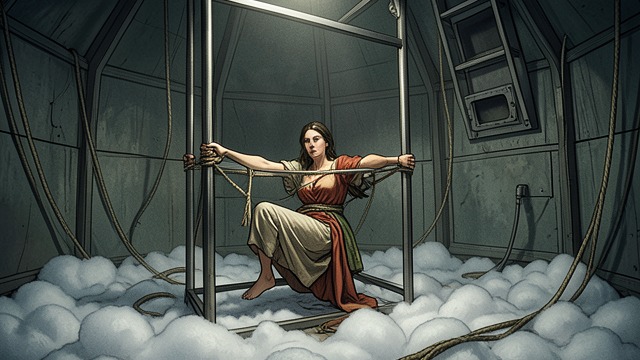
The Loft as a Prison
Space Designed for Silence
Ken Carlton has built a cage in a loft lined with soundproofing foam. Ropes fix a captive’s wrists and ankles to its sides, while a hatch and ladder control entry and exit.
The layout isolates the women from the ordinary life below. Shouting cannot reach neighbors, and even brief movement depends on Ken’s permission.
Confinement Beyond Bars
The cage represents a larger system in which food, sleep, sanitation, and bodily safety are controlled. Its ordinary domestic setting makes the violence more disturbing, not less.
The Word Doll

Naming the Captives
A Language of Ownership
Ken calls the women “dolls,” treating them as objects to use, exchange, and store. The label denies their names and separates his desires from any recognition of their suffering.
He speaks of replacing one doll with another whenever he grows dissatisfied. This vocabulary makes the victim-replacement cycle sound like a routine he controls rather than a series of murders.
Names as Resistance
The captives answer this erasure by introducing themselves to one another. Louise, Felicity, Jill, and Zoe remain distinct people in their conversations, even when Ken tries to reduce them to interchangeable possessions.
Advice Inside the Prison

Knowledge Against Isolation
Lessons Passed Between Captives
Louise explains how the loft works and how Ken punishes attempts to call for help. She gives Felicity advice about eating, conserving strength, and keeping a sense of self intact.
Felicity later repeats what she has learned to Jill. Jill in turn explains the captor’s routines to Zoe, so knowledge moves through the cage even when the women cannot move freely.
A Quiet Counterforce
The advice does not open the hatch or stop violence. It creates a form of connection the captor has not fully controlled: each woman can leave the next one better prepared.
The Cage Is Opened
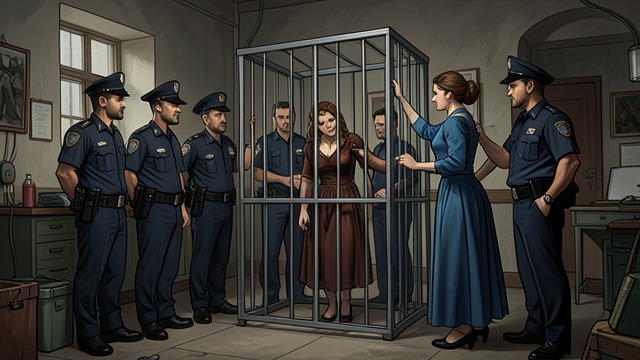
The Prison Becomes a Crime Scene
Police Enter the Loft
Eve Strong reaches the cage and asks Jill how to release her. Paul Forrester uses cutters on the padlock, while Bill Nicol tends to Zoe’s weak pulse.
The officers’ arrival changes the function of the loft from a sealed system of control to a site of evidence and rescue. The women’s restraints can now be handled by people trying to free them.
An Image Reversed
The cage remains physically present, but its power is broken when Ken can no longer decide who enters or leaves it. The rescue gives the structure a new meaning: proof of what the captives endured and what the police must prosecute.
The Captor Faces His Captives

Control Changes Hands
A Threat Outside the Cage
Ken returns and attempts to control the officers by holding Eve at knifepoint. The former captives remain vulnerable, but Jill is no longer only waiting for whatever he decides to do.
Eve creates a moment of opportunity, and Jill strikes Ken with the blow lamp. Police restrain the man who had organized every movement around the cage.
Freedom Begins Unevenly
The women leave the loft for medical care, but survival is not the same as immediate recovery. The physical cage has been opened; the effects of captivity will require time, support, and testimony.
Before Monday 19 February
Sunday 18 February
Sunday 18 February night
Saturday 3 March
Saturday 3 March
